


Home and Lifestyle
DIY Drain Fix: How to Unclog Your Sink or Shower Using Baking Soda and Vinegar
DIY Drain Fix: How to Unclog Your Sink or Shower Using Baking Soda and Vinegar
Got a slow drain? Learn Tidyex's simple, eco-friendly method to unclog your sink or shower using just baking soda & vinegar. Get water flowing freely again!


Introduction
There's nothing quite as frustrating as standing in a pool of water in your shower or watching your sink fill up after a quick hand wash. A slow or clogged drain isn't just an inconvenience; it can be a source of stress, a breeding ground for odors, and a signal that your plumbing needs attention. Before you reach for harsh, chemical drain cleaners that can be bad for your pipes, your health, and the environment, consider a powerful, yet gentle, solution that's likely already in your pantry: baking soda and vinegar!
Tidyex is here to guide you through a simple, eco-friendly DIY method to banish those stubborn clogs and get your water flowing freely again.
Why Do Drains Get Clogged Anyway?
Think of your drain as a busy highway. Over time, little bits of everyday life start to pile up. For sinks and showers, it's usually a nasty mix of hair, soap scum, grease, and general grime. These bits stick together, building up a sticky mess inside your pipes. Eventually, that highway gets so narrow, traffic just stops, and so does your water! Our baking soda and vinegar trick is fantastic for dissolving these common, gunk-based clogs.
Your Eco-Friendly Unclogging Toolkit
To tackle that stubborn drain, you'll need just a few simple items:
-
Baking Soda: A powerful deodorizer and mild abrasive.
-
White Vinegar: An acidic powerhouse that reacts with baking soda to create a fizzing action.
-
Boiling Water: Essential for loosening grease and pushing the clog through (once flow is established).
-
A Kettle or Pot: For heating water.
-
A Plunger: Your first line of defense for a complete blockage.
-
A Cloth or Stopper: To cover the drain.
-
Gloves, Tweezers, or a Simple Drain Snake (Optional): For manual removal of visible debris.
The Tidyex Method: Your Step-by-Step Guide to a Clear Drain
This guide covers everything, whether your drain is just a bit sluggish or totally blocked up.

First, If Your Drain is COMPLETELY Blocked (No Water Goes Down):
If your drain is acting like a stubborn brick wall and won't let any water through, the baking soda and vinegar won't be able to reach the problem area properly. We need to create some space first!
-
Grab Your Plunger (Your Best Opening Move):
-
For Sinks: Fill the sink with an inch or two of water. If your sink has an overflow hole (that little opening near the top of the basin), cover it tightly with a wet cloth or have someone hold it shut. This creates a good seal. Now, position the plunger firmly over the drain. Pump it up and down with quick, strong pushes for about 15-20 seconds, keeping that seal tight. Then, swiftly pull it up. Repeat this a few times. The suction and pressure can often dislodge the main blockage.
-
For Showers/Tubs: Make sure there's enough standing water to cover the plunger's rubber cup. Press it down firmly over the drain and pump away.
-
-
Pull Out Any Visible Gunk (It Might Be Gross, But It Works!):
-
If your sink or tub has a removable stopper, pull it out. For shower drains, you might need to unscrew the cover. Often, the worst of the clog – usually a horrifying clump of hair and soap scum – is right there, just out of sight. Put on some gloves and use tweezers, needle-nose pliers, or even a straightened wire hanger with a small hook bent at the end to pull out whatever you can see. This simple step can sometimes clear the problem instantly!
-
-
Think About a Simple Drain Snake (If Plunging Doesn't Work):
-
If the plunger didn't quite do the trick, a small, inexpensive hand-crank drain snake (you can find these at any hardware store) can be really helpful. It's basically a flexible wire with a little corkscrew tip. Carefully feed it down the drain until you feel resistance (that's your clog!). Gently twist and push to break up or hook onto the blockage. Then, slowly pull it back out, hopefully bringing the gunk with it!
-
Once you've managed to get any water moving down the drain (even just a slow trickle after plunging or removing gunk), you're ready for the powerful baking soda and vinegar treatment!
Now, Let's Fizz Away the Rest (for Slow Drains & Post-Plunging Clean-Up):
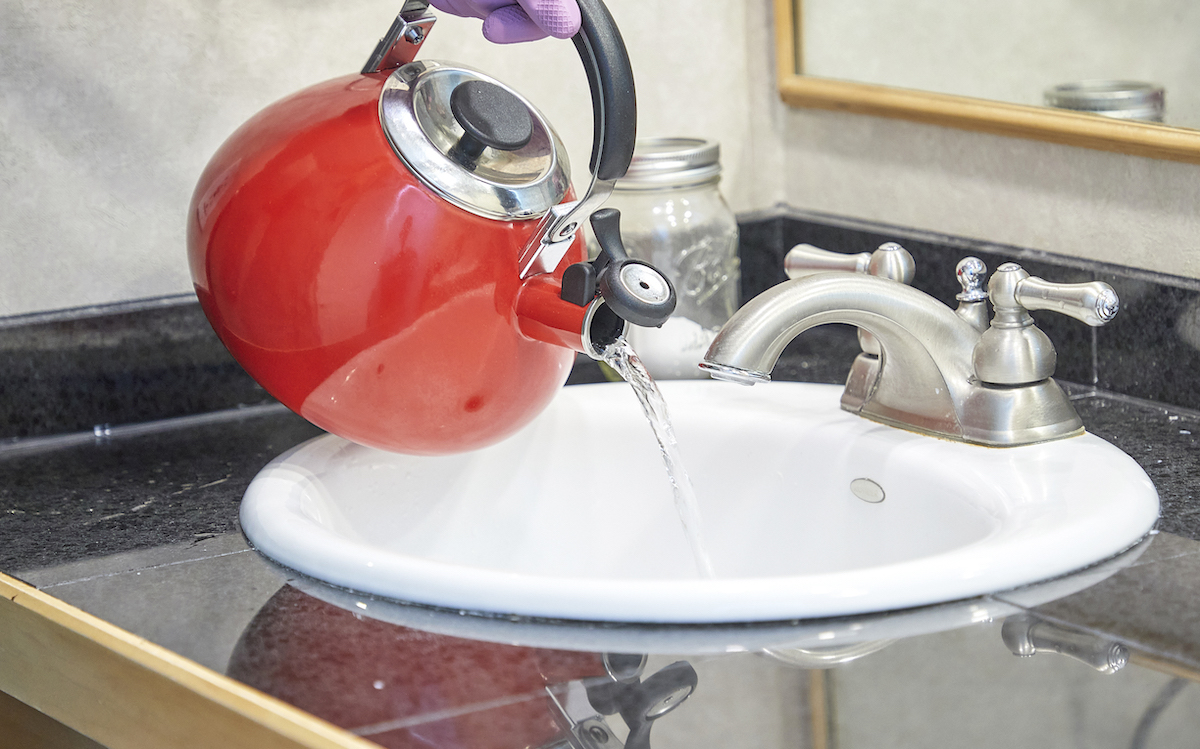
Step 1: The Hot Water Preheat (Now It Can Go Down!)
If your drain was already slow, or you've just cleared a major blockage, this step helps prepare the way.
-
Boil a full kettle or pot of water.
-
Carefully pour the entire pot of boiling water directly down the drain. This acts like a pre-wash, helping to melt any lingering grease or loosen stubborn soap scum.
-
Give it about 5-10 minutes to sit and work its magic.
Step 2: Time for the Baking Soda
This is where the magic begins!
-
Pour 1 cup of baking soda directly down the drain. Try to get as much of it into the drain opening as possible, not just sitting on top.
Step 3: The Vinegar Fizzing Action!
Get ready for the show!
-
Slowly pour 1 cup of white vinegar down the drain. You'll immediately hear that satisfying fizzing and bubbling sound – that's the chemical reaction creating carbon dioxide gas. This reaction is what helps break apart the clog.
-
Quickly cover the drain opening with a stopper or a wet cloth. This traps the fizzing action and pressure right where you need it, focusing its power on the clog.
-
Let it sit for at least 30 minutes to an hour. For really tough clogs, you can even leave it working overnight.
Step 4: The Final Hot Water Rinse
The grand finale!
-
After the waiting game, boil another full kettle or pot of water.
-
Carefully remove the stopper/cloth and slowly pour this second round of boiling water down the drain. This final flush will rinse away all the broken-down gunk and any leftover residue.
What If the Clog is Super Stubborn?
If your drain is still acting up, don't despair! For really persistent clogs, you can repeat the entire baking soda and vinegar process once more. Sometimes, two rounds are needed to fully break down tougher buildups.
When to Call a Pro: While these DIY methods are incredibly effective for most common clogs, some blockages are just too big, too deep, or caused by something completely different (like tree roots or pipe damage). If, after trying all these steps (including plunging and manual removal for totally blocked drains), your drain is still slow or completely stopped, it's definitely time to call a professional plumber. They have specialized tools and expertise to tackle those really tricky situations without damaging your pipes.
See Also: How to clean Shower Head
Keep Those Drains Happy: Prevention is Key!
The best clog, of course, is one that never happens! A little regular care can save you a lot of headache (and money!):
-
Use Drain Screens: Pop a simple mesh screen over your sink and shower drains. They're cheap and do an amazing job of catching hair and bigger bits of debris before they disappear down the pipe.
-
Regular Hot Water Flushes: After washing dishes or taking a shower, let the hot water run for an extra minute or two. This helps rinse away any accumulating soap scum or grease before it can harden.
-
Monthly Maintenance Trick: Once a month, give your drains a mini-cleanse. Pour ½ cup of baking soda down, followed by ½ cup of white vinegar. Let it sit for 15-30 minutes, then flush with hot water. This proactive step can prevent minor buildups from turning into major blockages.
-
Be Mindful of What Goes Down: Avoid pouring cooking grease, coffee grounds, or anything thick and sticky down your drains. These are notorious clog-creators!
By following these simple, natural, and highly effective methods, you can say goodbye to frustrating clogs and hello to perfectly flowing drains. Your pipes (and your sanity!) will definitely thank you!
Subscribe to Our Newsletter!
Stay fresh! Stay informed! Be the first to know about our release and industry insight